


School of Logic Curriculum
Some might think Classical Education is attractive, but impractical. But is this true? The pinnacle of our Logic curriculum is the study of logic itself. Our informal/inductive and formal/deductive curricula equip students to recognize errors in arguments, both their own and others'. It is a skill they take into the rest of their studies:
| Science |
|---|
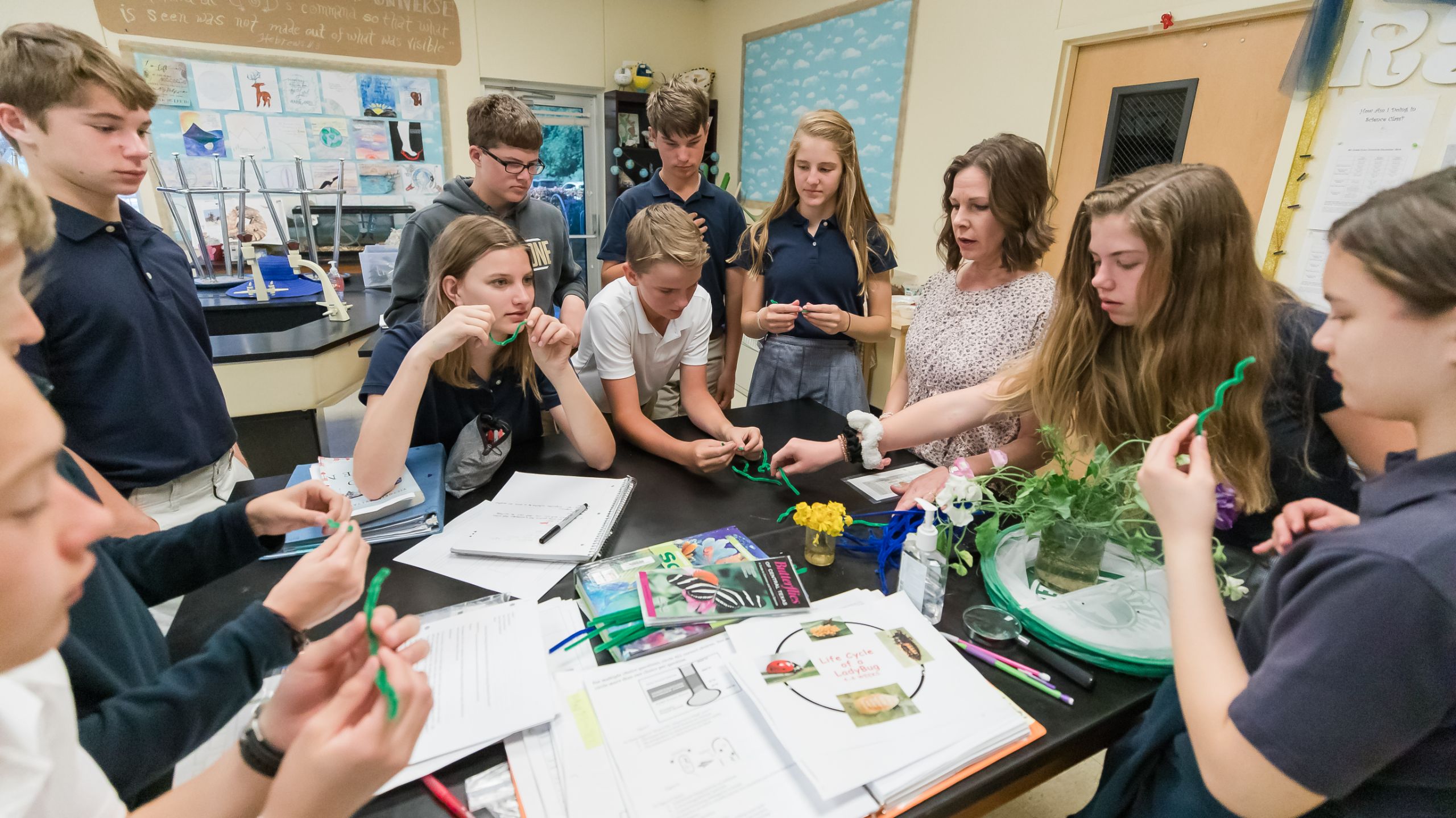
| Life Science is the focus for 7th grade, while 8th graders study Earth Science. With a focus on Wonder, Worship, Wisdom, and Work, we recognize science as a tool that helps us understand how the natural world declares the glory of God. The leading question for our classes is “How will what I learn today help me to know God and make Him known?” Life science explores the marvelous microscopic machinery of the cell and investigates the dazzling diversity of life. In Earth Science we discover the wonder and beauty of God's creation by learning about the place He made for us to call home. We study various aspects of His Creation, including geology, meteorology, oceanography, and astronomy. We delve into galaxies and solar systems, plate techtonics and mountains, all with a view of God as creator of all. |
| Mathematics |
| The primary goals of the Regents mathematics program are to cultivate problem-solvers through the pillars of perseverance, collaboration, communication, grace, and service to others; and to deepen students' awe for God as the creator of the language of math. In 7th grade pre-Algebra, students are challenged to grow in their understanding of numbers, patterns, and operations to more deeply grasp the order and beauty of mathematics. In 8th grade Geometry, we start with understanding that geometry was birthed out of humanity’s desire to measure, analyze, and comprehend the created order. We learn and embrace the importance of developing mathematical knowledge and models of the world in order to serve the needs of our neighbors. |
| Latin |
| We will value words, language, and the power they have to shape us and glorify God. In SOL Latin we further develop students' ability to read, comprehend and analyze Latin texts. Students will learn vocabulary and grammar, and develop reading comprehension to be prepared to read original Latin prose with competence. We will think carefully about the times and places God's redemptive story is clearly seen in history. We will look particularly at the Roman empire as the context for the incarnation of the Word and at events that prepared the ancient world for the coming Messiah and the spread of Christianity in the first few centuries after the resurrection. We will explore Roman history and culture, pondering how it has shaped the development of the Western world and how it compares to the kingdom of God as described in the Bible. |
| Literature |
| As writers, SOL English students will practice constructing logical and well-written sentences and paragraphs that successfully communicate their ideas through expository, persuasive, narrative, and creative writing. Students will be challenged to form as well as articulate their own opinions through regular in-class discussion and carefully planned essays. They will learn how to best arrange their words and ideas by brainstorming, drafting, editing and revising their written works. As readers, English students will further develop skills in effective reading comprehension, note taking, and general organizational and study techniques. They will practice identification of plot, characterization, themes, and various literary elements. As they are guided through a variety of literary genres, students will continually be challenged to look beyond the surface of a novel and recognize what is true, good, and beautiful within each text. In 8th grade, students will learn to uncover, articulate, compare, and contrast different worldviews found within the pages of their novels using their logic and literary skills. They will also use their novels as a lens through which toview the past, connecting literature to their studies in history. |
| Bible |
| As we undertake a study of the Holy Scriptures, we focus on how Jesus Christ is central to our understanding of the revelation that we have received in the written Word, as we explore the writings of the Old and New Testaments, and how He helps us understand all of Holy Scripture. We look at the Scriptural and historical context of these sacred writings, in order to realize how the glory and wonder of His work revealed in the stories that we read in the Scriptures relate to life in the 21st century, especially for middle school students. |
| Logic |
| Logic is the art and science of reasoning. Students study Logic to begin to learn how to form arguments that are reasonable and valid, and to spot those that are flawed. We begin with an overview of both deductive and inductive logic, with a focus on their application to argumentation and as tools used to discover truth. Evaluating validity of categorical and propositional arguments, we apply logic to help understand and defend our Christian faith. |
| History |
| The British Empire through WWI are the subject of study for 7th grade history, while 8th grade covers history from the early 1900s to the present. History will be understood not only by studying geopolitical events, but also by studying the philosophy, art, and music of each decade. A particular emphasis is the development of students’ critical thinking, reading, writing, and discussion skills. As historians we will learn to recognize the importance of ideas, worldviews, and beliefs as they influence people and events, all through a lens that recognizes God at work in the world. |
| Fine Arts |
| In the School of Logic, students may choose from electives including Band, Mixed Choir, Orchestra, Visual Art, Drama, Dance, and Physical Education. Music students of all disciplines begin studying and performing more challenging and exciting music, sharpening instrumental prowess and focusing on new skills. Multiple performance and competitive opportunities are offered. Our desire is to see the true, good, and beautiful reflected in the world around us; to know ourselves created in God's image with creative abilities gifted by Him; and to use our gifts to reflect His glory. |
The School of Logic
| 7th grade |
|---|
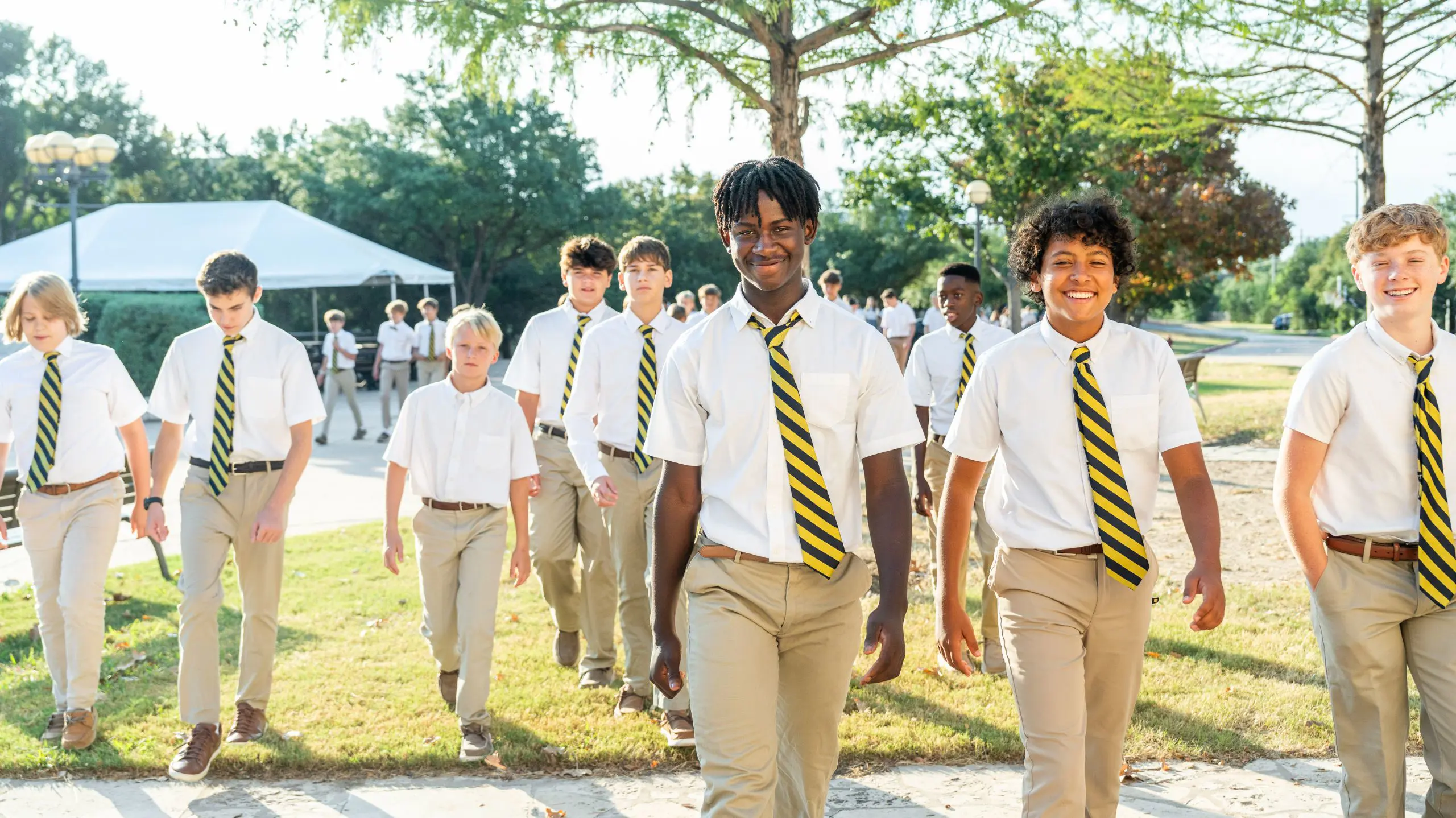
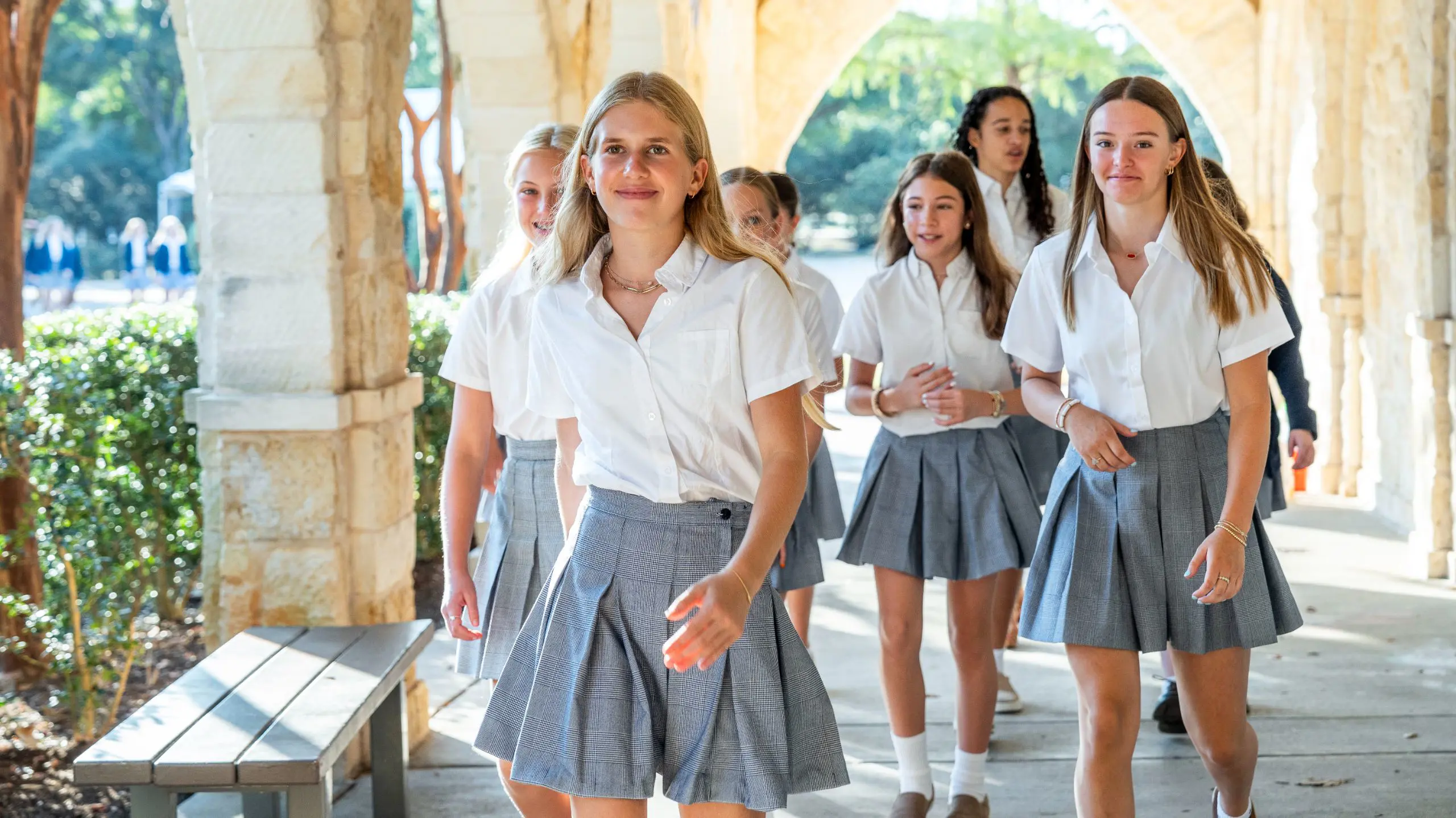
| The 7th grade offers a transition from the Grammar School. From homeroom-based classes where children stay together all day to a rotating schedule that finds different mixes of students in each classroom; to broad elective options; to uniforms suited for more mature students and a later lunchtime; 7th grade allows growing students to explore and create, while shepherded well by a faculty with long tenure teaching 7th and 8th grade students. |
| 8th grade |
| Our 8th grade students continue to develop independence as they move toward high school, and serve as mentors in their homerooms. In keeping with the logic phase of student development, we focus on the "why" and "how" of each subject, forming understanding and drawing connections between different fields of study. The year ends with a science and history trip in the Texas Hill Country. |
| Academic Discipleship |
|
Our homerooms are designed to provide students identity and community, while working to honor and instill Christ-like virtues through conversation and competition. They are single gender, mixed-age, and encourage older students to mentor younger throughout the school year. |
| An Education Pointing Towards Christ & Virtue |
|
All classes are designed to point students toward Christ and toward Christian virtue, through curricular content and teacher discipleship. The School of Logic is a tight-knit community, nestled well between the younger children of the Grammar School and the older School of Rhetoric students. We embrace childhood and creativity while also supporting the developing freedom and maturity of our students, as they grow in favor with God and man. |
“Neque enim quaero intelligere ut credam, sed credo ut intelligam.”
I do not seek to understand in order that I may believe, but rather, I believe in order that I may understand.
SAINT ANSELM